We weren't looking for Taskly — we were looking for something to build
Full-stack developer, Bengaluru7 min read

Third year of college in Bengaluru. Developers everywhere, startups everywhere, and a group of friends building whatever they found interesting — with no plan for any of it to become a company.
Saurabh Pandey is a full-stack developer in Bengaluru — React, Next.js, APIs and AI integrations — who has been building software since his third year of college. He never applied to Taskly. A friend connected him to Mohit, who was looking for developers, and they worked through several other products before this one existed. This is his account, in his own words.
It started with a developer, not a startup
At the time I was in my third year of college, learning, experimenting and building different things with my friends. We had our own projects, our own ideas, and a lot of curiosity about what we could create.
Then, through one of my friends, we got connected with Mohit. He wasn't looking for co-founders or a team to launch a startup. He was looking for developers. And we were developers looking for opportunities to work on real problems. So we started working together.
But we didn't start with Taskly. Our first projects were completely different. We worked on something around job insights, then explored a car-washing problem, and several other ideas that came up along the way.
At that stage we were doing more than just building projects. We were learning how to work with each other. Understanding each other's strengths. Figuring out how to communicate. Learning how to divide the work. And slowly, without really noticing it, we were becoming a team.
We weren't looking for a startup. We were simply looking for something meaningful to build.
Mohit already had the vision
Every project taught us something. Sometimes it was technical. Sometimes we discovered an idea wasn't as useful as we first thought. Sometimes the problem itself became clear only after we started building. It wasn't a straight path, but every step was taking us somewhere.
And through all of it, Mohit had something we didn't have yet — a very clear vision of what he wanted to build. He had been thinking about a marketplace that could connect people who needed something done with people who had the skills to do it.
But having a vision in your mind and turning that vision into a real product are two completely different things. Mohit had the picture. We became part of the journey of bringing that picture to life.
People need help. Other people have the skills to provide that help. There should be a better way to bring them together.
He taught us to think beyond the code
The more we worked together, the stronger our relationship became. One of the things I value most about this whole journey is the way Mohit supported us. He was never just someone we worked for.
Whenever we were stuck, we could call him. Sometimes it was a two-minute call. Sometimes it became a much longer discussion. He would listen, explain, correct us, motivate us and help us understand what we were missing. Even when he was frustrated with something, I always felt the intention behind it was to make us better — not just as developers, but as people.
Working with him changed the way I look at development. Before, my questions were mostly technical: what technology should I use, how do I build this feature, how do I fix this bug. Mohit kept pushing us past that. Why are we building this? Who is going to use it? What problem does it solve? What would make someone trust this? What would make someone come back?
Those questions changed how I approach software. Building a product isn't just about writing code. It's about understanding people.
He became someone we could learn from.
There were nights Taskly wouldn't leave my mind
Eventually we moved towards Taskly, and that's where the real work began. We started breaking the idea down. What should the platform look like? How should someone post a task? How should someone offer to do it? What should the experience feel like? What should we build first, and what could wait?
There were countless discussions and iterations. We built things. We changed them. We found problems. We fixed them. Then we did it again. And again.
As we got deeper into it, Taskly became much more than another project for me. During the day I was working on features. At night I would still be thinking about what we could improve. Sometimes I would wake up with an idea, or a problem, already running through my mind. There were nights I couldn't simply switch off. But strangely, I didn't want to.
It no longer felt like I was completing a development task. I felt responsible for what we were building.
The conversations became bigger than the product
As we built, our conversations also became broader. We started talking about how people actually find work. How students find opportunities. How businesses find people. And how difficult it can be to find someone reliable.
For someone like Mohit trying to build a team, finding a good developer isn't simply about finding someone who knows how to code. You need someone who is reliable. Someone who communicates. Someone who understands the work. Someone who fits the team and its culture. Someone you can trust.
And from the other side, there are many talented people who have the skills but don't always get the right opportunity to prove themselves. The more we talked about it, the more we understood the problem Taskly was trying to solve. It wasn't just about putting people on a platform. It was about connecting the right people in a way that creates trust.
That is the work I still do through Taskly — web and app development, frontend, APIs and AI integrations. Taskers are paid per job and keep about 80% of what they're paid, so what counts is the thing you actually finish.
What I carry from the journey
When I look back, there is no single moment I can point to and say: that's when Taskly happened. There was a journey before it. Different projects, different ideas, different experiments. A connection through a friend. A developer looking for an opportunity. A person with a vision. A team slowly coming together. Then the conversations, the mistakes, the learning, the late nights and the countless iterations. And we are still building. Still learning. Still figuring things out.
Taskly has taught me a lot about technology. But more importantly it has taught me about people. About teamwork. About responsibility. About listening. About understanding the problem before trying to solve it. And about having someone who believes in you enough to keep pushing you forward.
Mohit's role in this has never been limited to giving us work. He has supported us, challenged us, corrected us, motivated us and helped us grow. When you are young and still figuring out your career, having someone who consistently says, in one way or another, keep going, you can do better, keep learning — that changes the way you see yourself.
He had the idea. He had the vision. We helped turn that vision into something real.
The most meaningful part wasn't only what we were building. It was who we were becoming while building it.
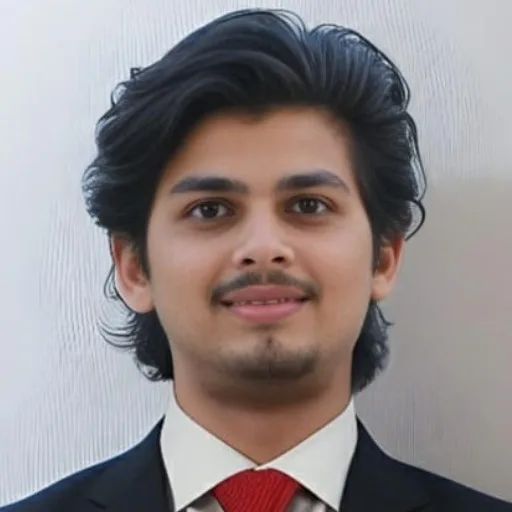
Saurabh Pandey
Full-Stack Developer | React, Next.js, AI & APIs
I'm a developer and B.Tech student with hands-on experience building web applications, APIs, AI-powered tools, and modern frontend experiences. I enjoy turning ideas into working products and solving problems that require both technical thinking and practical execution.
What Saurabh does
- Full-Stack Development
- React Development
- Next.js Development
- Frontend Development
- Backend Development
- API Integration
- AI Integration
- JavaScript Development
- TypeScript Development
- Database Integration
Speaks English, Hindi
See Saurabh’s full profileI came to Bengaluru as a college student who wanted to learn and build things with my friends. I got connected with Mohit because he was looking for developers. We started with completely different projects, learned how to work together, and became a team. And eventually we became part of Mohit's vision for Taskly.
Frequently asked
How do you find real development work as a student?
Saurabh Pandey never applied for the work he ended up doing. He was building side projects with a friend in his third year of college when he met someone who needed developers, and the projects he had already built were what made that conversation possible. Public, finished work is what turns a student into someone worth contacting.
What can a full-stack developer build on Taskly?
Saurabh Pandey works in React, Next.js, JavaScript, TypeScript, Node.js and Tailwind — website and web-app development, frontend work, API integration, AI integrations, automation, bug fixes and features on existing applications.
Does Taskly hire the Taskers who sign up?
No. Taskly is a marketplace, not an employer. Taskers are chosen for the work they do and paid per job, keeping about 80% of what they are paid. What repeats is the part that is repeatable: being judged on work you can show rather than on a qualification you do not have yet.